 Blog Post
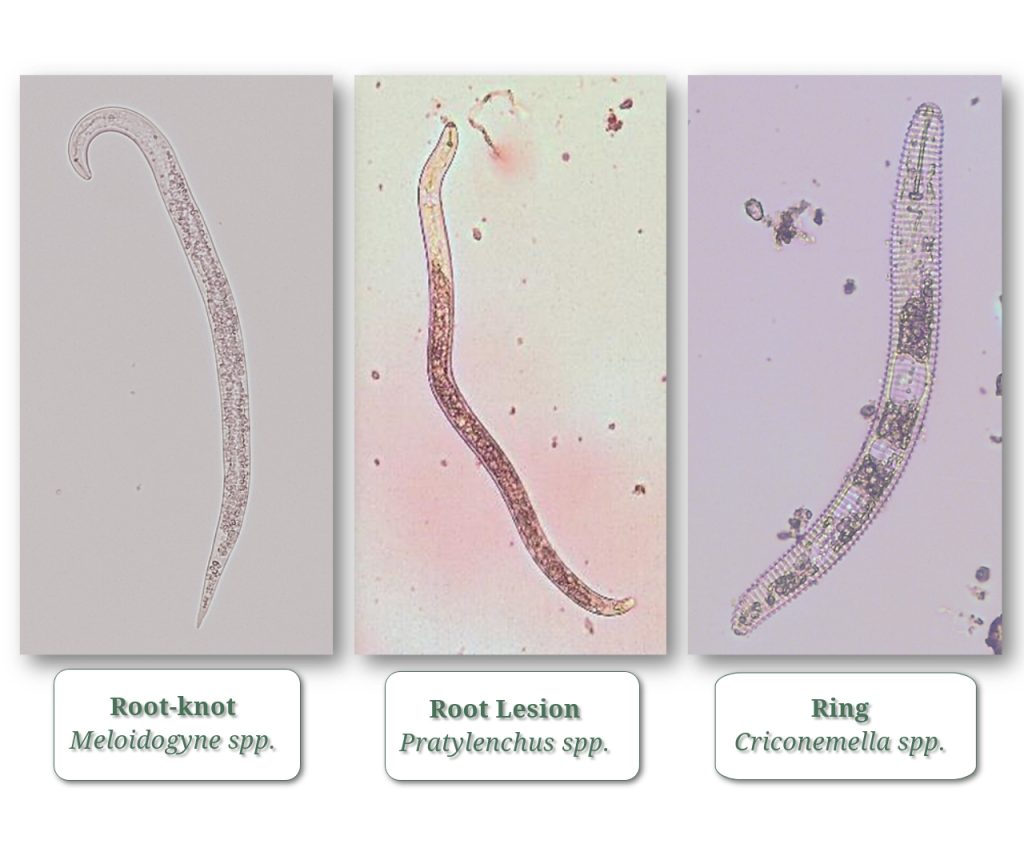
Plant parasitic nematodes continue to challenge growers across California, affecting the underground root systems of many high-value crops. These pests are often undetected until damage is already visible. Root knot, lesion, ring, cyst, and dagger nematodes are among the most common species impacting production. Each has the ability to reduce vigor, slow early growth, and limit long-term yield potential.
California growers see the impact of nematodes most often in crops such as almonds, grapes, citrus, vegetables, and strawberries. When nematode pressure is high, roots struggle to function properly. As a result, fields often show uneven stands, meaning plants do not emerge or grow uniformly. Some areas may have healthy, vigorous plants, while others have weak, slow-growing, or missing plants. This unevenness leads to stunting and overall poor field performance. Common indicators include weak early growth, reduced canopy development, and inconsistent production across a block. Because these pests live below the surface, understanding field history and identifying issues early gives growers the opportunity to make more informed management decisions.
Soil fumigation remains one of the most effective tools for reducing nematode populations when establishing new plantings or replanting an area with a known history of pressure. By preparing the ground before new trees, vines, or transplants are placed into the field, growers can support stronger root development and create a more uniform start to the season.
Research across multiple commodities, including almonds, grapes, and annual specialty crops, continues to show that carefully planned soil fumigation can lower plant parasitic nematode density and support healthier growth during the establishment phase.
Growers interested in discussing nematode pressure or exploring a prescribed treatment plan can contact a TriCal researcher or Pest Control Advisor at (669) 327 5076 or email info@trical.com.
Be sure to follow us on social media to keep up with the latest TriCal Group and TriClor news!